Open banking and machine learning end surprise subscription charges
 admin4361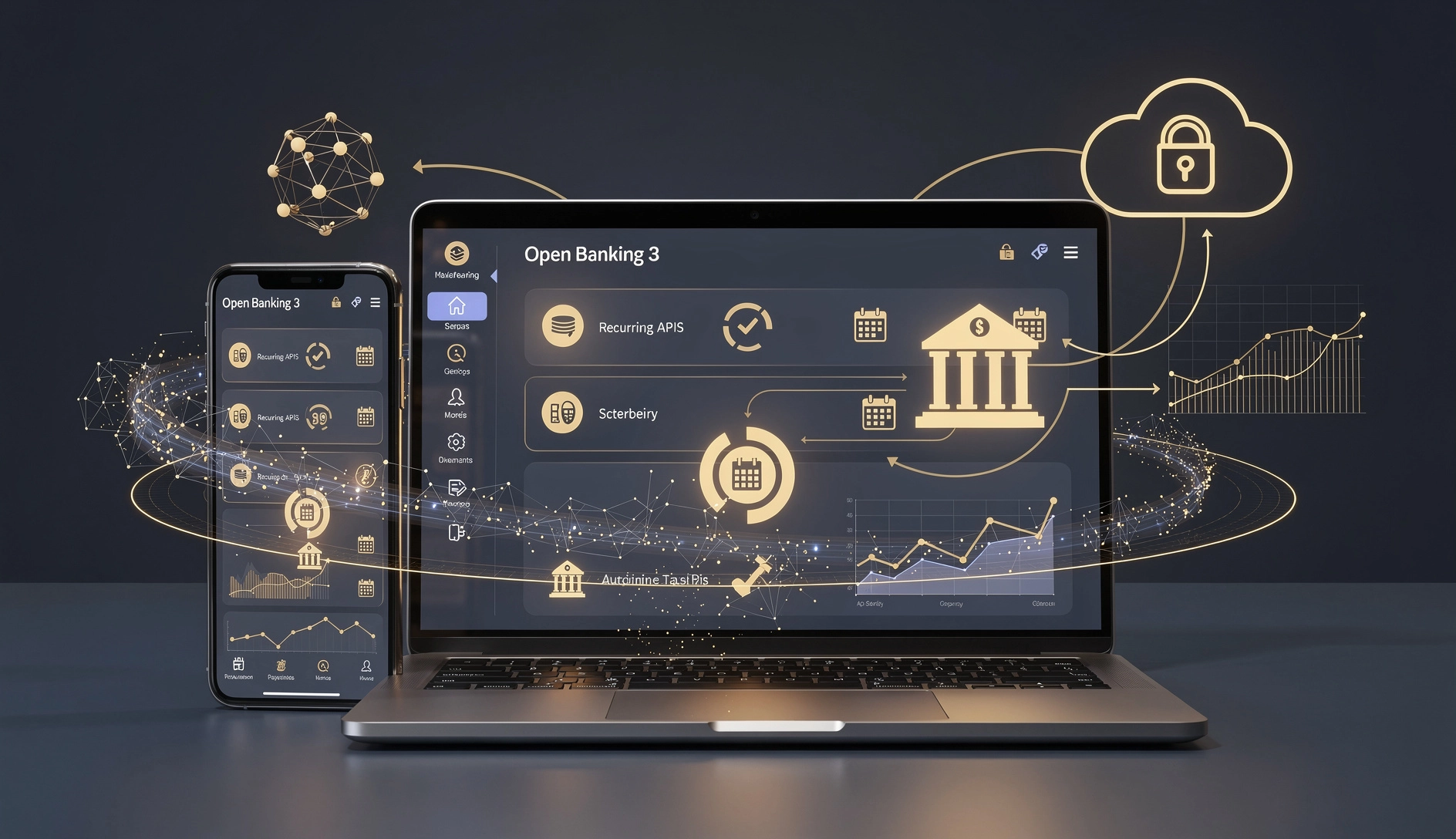
On March 13, 2026, consumers and regulators are looking more closely than ever at recurring charges that appear on bank statements without clear notice. Open banking, secure APIs that allow third-party apps to read transaction data with consumer permission, combined with machine learning is now being used to detect, classify and stop surprise subscription charges before they become a costly annoyance.
This article explains how open banking data and modern ML models work together to find hidden or forgotten subscriptions, what real products and regulations are driving adoption today, the privacy and safety trade-offs involved, and what consumers and businesses should expect next.
How open banking reveals recurring subscriptions
Open banking APIs give authorized apps access to detailed transaction histories and merchant metadata that banks already hold. That level of visibility makes it possible to detect patterns, repeated debits from the same vendor, seasonal or tiered billing, and connector names that hint at partner networks, without requiring screen-scraping or credential sharing.
The availability of standardized transaction feeds and richer merchant descriptors across banks is an important enabler: financial data platforms and aggregators can normalize feeds from different institutions and expose the recurring-payment signal to analytic systems. Industry analysts and infrastructure reports highlight open banking’s role in making transaction-level subscription detection feasible at scale.
For consumers this means apps can now identify a subscription even when the vendor’s billing name is abbreviated or bundled with other charges, allowing users to see all active recurring payments in one place and take action (pause, cancel, dispute) directly from the app interface.
How machine learning detects hidden charges
Machine learning models apply pattern recognition to transaction sequences: clustering algorithms find repeated payments, classification models distinguish trial charges from full subscriptions, and NLP extracts vendor intent from messy description strings. Ensembles that combine rules-based heuristics with ML classifiers are common because they balance interpretability with high recall.
Regulatory and industry reviews note that banks and providers in Europe and beyond are increasingly testing AI and ML to automate transaction monitoring, fraud detection, and customer insights, use cases that include subscription identification and notification. Those efforts emphasize model governance, explainability, and performance monitoring in production.
In practice, ML reduces false positives by learning vendor-specific billing behaviors (for example, monthly vs. annual renewals, variable amounts tied to usage tiers) and by combining account-level signals (balance changes, card tokenization events) with merchant metadata to build a high-confidence subscription label.
Real-world tools and consumer-facing features
Subscription management apps and bank features that scan transaction feeds are now mainstream. Several consumer fintechs and established banks offer “subscription insights” dashboards that surface recurring charges and send renewal alerts; third-party apps can perform the same function by connecting via open banking APIs with explicit user consent.
Industry coverage and product roundups from 2024, 2026 document a growing market of tools that automatically find hidden fees and recurring services, offering one-click cancellation or negotiation workflows and proactive alerts for price hikes or trial-to-paid conversions. These product experiences are central to how many users reclaim unintended spending.
Beyond standalone apps, banks are embedding subscription intelligence inside mobile banking experiences, flagging unusual renewals, suggesting downgrades, and even offering dedicated controls to block future charges from a merchant, improving visibility without forcing consumers to add yet another app.
Regulatory momentum and regional differences
Open banking adoption and the regulatory frameworks that support it vary by region. Europe’s PSD2 and follow-on initiatives have pushed banks and third parties to operationalize APIs and oversight, while EU regulators are increasingly focused on how AI is used in finance, publishing guidance and assessments that affect subscription-detection deployments.
In the United States, policy discussions and rulemaking on open banking continued into 2025, 2026; reports from financial policy institutes document ongoing work by regulators and consumer agencies to balance access, privacy, and consumer protection as data portability expands. Those developments shape which analytic features banks and fintechs can offer and how consent and dispute processes are implemented.
Because rules, consent models and liability differ between jurisdictions, solutions are often localized: the same ML-driven feature set may be available in an EU market through bank APIs but require different consent handling or partnerships in another country.
Privacy, security and model risk
Using transaction data to surface subscriptions raises privacy and security questions. Firms must design consent flows that are clear about which accounts and date ranges will be read, apply strong minimization so only the signals needed for subscription detection are retained, and use encryption and tokenization to protect data at rest and in transit.
Operational model risks, drift, adversarial inputs, and feedback loops, are also material. Industry guidance and bank AI governance programs recommend continuous monitoring, human review for edge cases, and conservative update schedules to avoid models that mislabel payments or miss new merchant patterns. These safeguards are especially important when automated actions (like blocking a charge) are offered.
Transparency features, showing users why a charge was labeled as a subscription and giving them one-tap ways to correct errors, both reduce regulatory friction and improve user trust, which is crucial for sensitive financial permissions.
Business implications and merchant responses
Greater transparency around subscriptions pressures merchants to improve billing clarity and consent flows. Companies that hide renewal terms or fail to surface price changes risk higher churn, disputes, and reputational harm when consumers use open banking-enabled tools to discover and contest charges.
At the same time, merchants can benefit from lower churn and fewer chargebacks if they proactively integrate with access-control and notification features or offer simple cancellation APIs. Some platforms are beginning to expose richer invoice metadata through payment networks and account-to-account rails, which makes machine-based classification more accurate and reduces consumer friction.
For subscription businesses, the net effect is an incentive to be clearer, to adopt standardized identifiers in billing descriptors, and to build direct integrations that reduce the ambiguity machine learning models must resolve.
What consumers should do today
Consumers who want to avoid surprise subscription charges should connect a trusted subscription-tracking app or enable their bank’s subscription insights feature where available, review active subscriptions regularly, and keep payment methods up to date to receive timely renewal notices.
When consenting to open banking access, users should check the app’s privacy policy and retention practices, limit access to the accounts needed for analysis, and enable alerts for large or out-of-pattern renewals, simple steps that dramatically reduce the chance of unnoticed charges.
Finally, individuals should keep records of cancellation attempts and use built-in dispute or chargeback channels promptly if an unwanted renewal posts, since many services have narrow windows for refunds or reversals.
Open banking and machine learning do not eliminate all dispute friction overnight, but they make the billing ecosystem far more transparent. When properly governed and clearly consented to, these technologies identify forgotten or opaque subscriptions faster than manual review and give consumers practical ways to control recurring spending.
As adoption spreads and regulators refine rules, expect more banks and platforms to ship subscription controls, meaning fewer surprise charges and a shift toward clearer, consumer-friendly billing across digital services.