How automated round-ups, payroll defaults and AI nudges grow your emergency cushion
 admin4361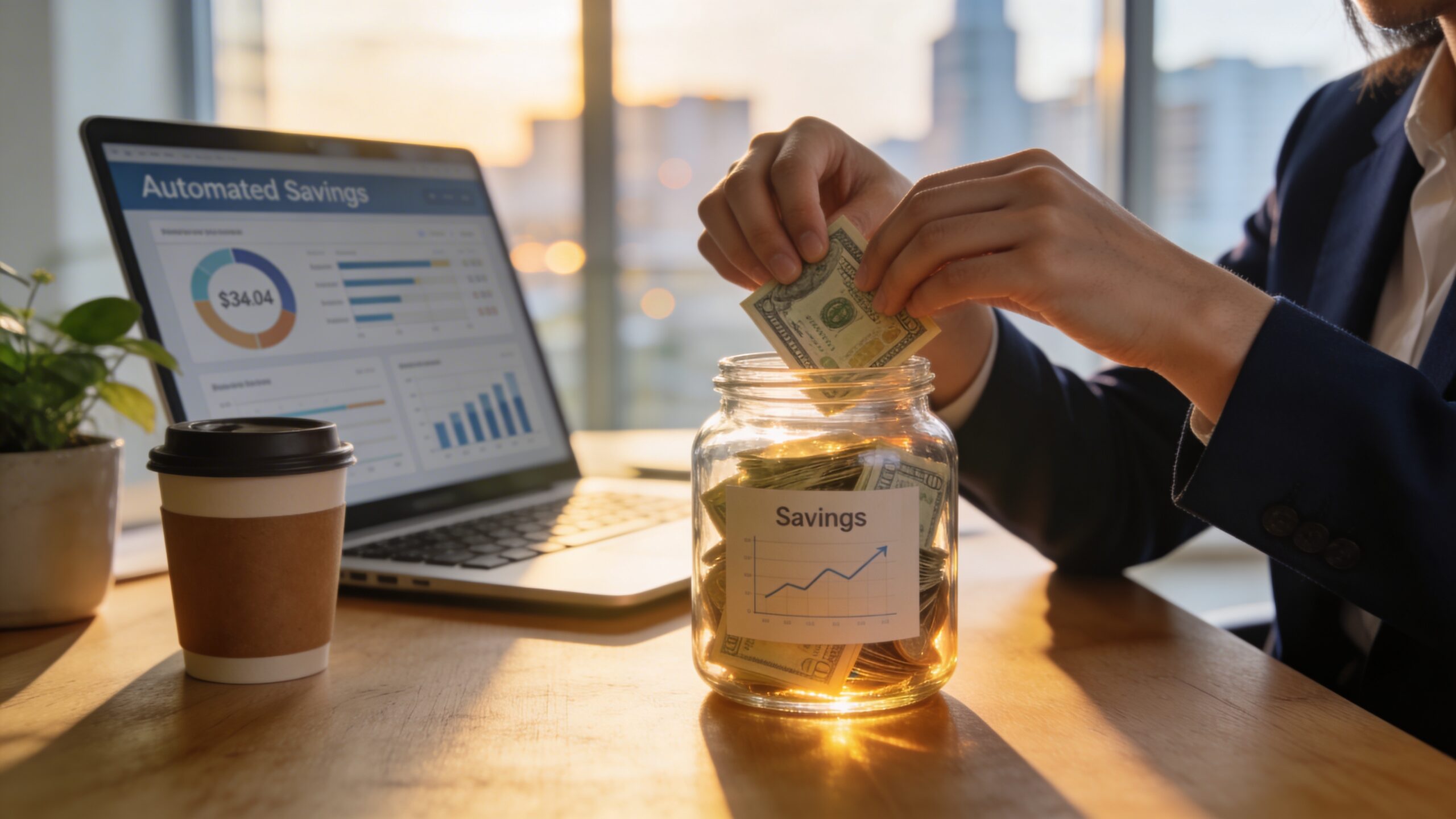
Most people know that an emergency cushion matters, but building one feels slow and optional until a shock happens. Small automation,round-ups, payroll defaults, and timely nudges,change the math: instead of relying on willpower, systems route tiny, frictionless flows of money into a separate buffer so savings grow without painful trade-offs.
This article explains how those three mechanisms work, what evidence says about their effectiveness and limits, and how privacy-first, on-device design can let freelancers, privacy-conscious individuals and small finance teams get the benefits without surrendering their data. The guidance is practical and safe for people who prefer to keep bank CSVs and analysis on their own device.
How automated round-ups quietly accumulate cash
Automated round-ups (also called spare-change or micro-savings) take each card transaction and round it up to the nearest dollar, moving the difference into a savings pot. This low-friction approach turns passive spending into systematic saving: the amount per transaction is small, but frequent transactions compound into a meaningful sum over months.
Evidence from high-profile micro-investing services shows round-ups do generate inflows, but the net effect varies: some analyses find that growth often depends more on investment returns and occasional larger deposits than tiny daily round-ups alone. Users should treat round-ups as a steady drip rather than a full emergency-fund strategy on their own.
Design matters: allow users to cap round-ups, pause them quickly, and route funds to a true liquid emergency account (not just an investment wrapper). That reduces the risk that spare-change automation gives a false sense of security while leaving everyday liquidity exposed. Practical controls,caps, thresholds, and clear labels,turn round-ups from a gimmick into a reliable supplement.
Why payroll defaults grow savings faster
Payroll defaults,automatic enrollment and default contribution rates,are among the most robust ways to raise participation and build savings. Research shows automatic enrollment moves participation sharply upward, and higher default contribution rates produce sustained increases in saving behavior, especially when paired with automatic escalation.
Large employers and state auto-IRA programs that set sensible defaults see many workers saving who otherwise would not. For people paid by payroll, default routing of a small percentage into a liquid emergency fund or short-term account converts recurring income into reliable buffer-building without extra steps.
Practical rule: start defaults small (e.g., 3,5% into a liquid account), offer clear opt-out and easy adjustments, and communicate the purpose,emergency liquidity, not just retirement,so workers understand and keep access. Defaults work well only when paired with transparency and choice.
The role of AI nudges: targeted reminders that steer behavior
AI-driven nudges personalize timing, tone and size of prompts,reminding a freelancer to pause discretionary spending this week or to top up a rainy-day account after an unusually high paycheck. Early empirical work shows AI nudging can change decisions, but effects vary by context and how nudges are implemented.
Important limits appear in the literature: many app-based nudges produce short-term reductions in discretionary spending, but fewer produce durable habit change beyond a few months. That means nudges are powerful for activation and short boosts, but they work best when combined with systems that maintain momentum (e.g., payroll defaults + round-ups).
Ethical and practical safeguards are essential: AI nudges should be explainable, adjustable in strength, and explicitly aimed at the user’s stated goals (emergency cushion first). Recent scholarship also warns about one-size-fits-all AI nudging and the need for user agency and transparent objectives.
How combining tools creates compounding effects
No single tool is usually enough. Round-ups add continuous micro-savings, payroll defaults deliver steady percentage flows from income, and AI nudges provide timely stop-gaps and reminders,together they cover different behavioral failure modes: forgetfulness, present bias, and inertia. The combination reduces reliance on conscious effort.
Real-world programs and employer plans demonstrate that when automation is layered,automatic enrollment, escalation, plus periodic prompts,participation and contribution rates climb and remain higher than in voluntary systems. For freelancers and small teams, the same principle applies: stitch recurring automated inflows with occasional intelligent nudges to keep momentum.
Practically, treat tools as complementary: route payroll conservatively into a liquid buffer, use round-ups as an always-on supplement, and configure AI nudges to suggest one-time top-ups or rebalancing when the buffer dips. That approach balances growth, liquidity, and predictability. (This is an inference from the cited empirical patterns.)
Design for privacy: on-device nudges and local-first round-ups
Privacy-conscious users should prefer local-first, on-device processing whenever possible. On-device models and offline-first transaction parsing let apps identify recurring charges, detect spending patterns, and generate nudges without sending raw bank data to servers. Several recently published tools and projects show this pattern is practical today.
Technical approaches that support this vision include on-device ML (TensorFlow Lite, mobile model quantization), federated learning for aggregate improvements without sharing raw data, and secure enclaves/differential-privacy methods for any telemetry that must leave the device. Recent research and implementations in finance and fraud detection demonstrate these privacy-preserving options are becoming mainstream.
For teams building or choosing tools, prefer explicit local-first promises (CSV / PDF import, no-collection app modes, opt-in sync) and clear UX controls for automation strength and data export. That keeps the benefits of automation while minimizing third-party exposure of sensitive transaction histories.
Practical steps for privacy-conscious savers and small teams
If you want to grow an emergency cushion without sacrificing privacy: start by exporting bank CSVs or OFX statements into a local tool (so you control the data), and use built-in analyses to identify recurring inflows and outflows. Local parsing surfaces opportunities (monthly surpluses, leaky subscriptions) you can convert to automatic savings.
Set up a small payroll default or automated transfer if you can,3,5% of income into a liquid account is a conservative place to begin. Add capped round-ups for day-to-day purchases and enable an on-device AI nudge that only runs locally to suggest occasional top-ups after income spikes. These measures together produce dependable cushion growth while keeping your data private.
Finally, monitor and adjust: keep visibility via short-term cash projections and recurring-charge detection, and make it easy to pause or reduce automation if cash needs change. For privacy-first users, exportable CSVs and local backups preserve portability and control. Small, automated flows + occasional human review create a resilient, low-friction emergency cushion.
Automated round-ups, payroll defaults and AI nudges each address a different barrier to saving: friction, inertia and forgetfulness. When designed together,and when data stays under your control,they produce steady, measurable growth in a household or team emergency cushion.
For privacy-conscious freelancers and small finance teams, the takeaway is pragmatic: use conservative defaults, prefer local-first tools that accept CSVs and run nudges on-device, and keep clear manual overrides. Those practices let you build protection without giving up privacy or agency.